
Academic Projects
Learn how we’ve collaborated with future innovators, engineers, and designers in universities across the nation
Through the Mobility Independence Foundation’s (MIF) Academic Partnership Program, students applied their skills to assist mobility disabled individuals.
Mobility disabled individuals include those acquired congenitally, sustained through illness and injury, or age-related.


Case Studies

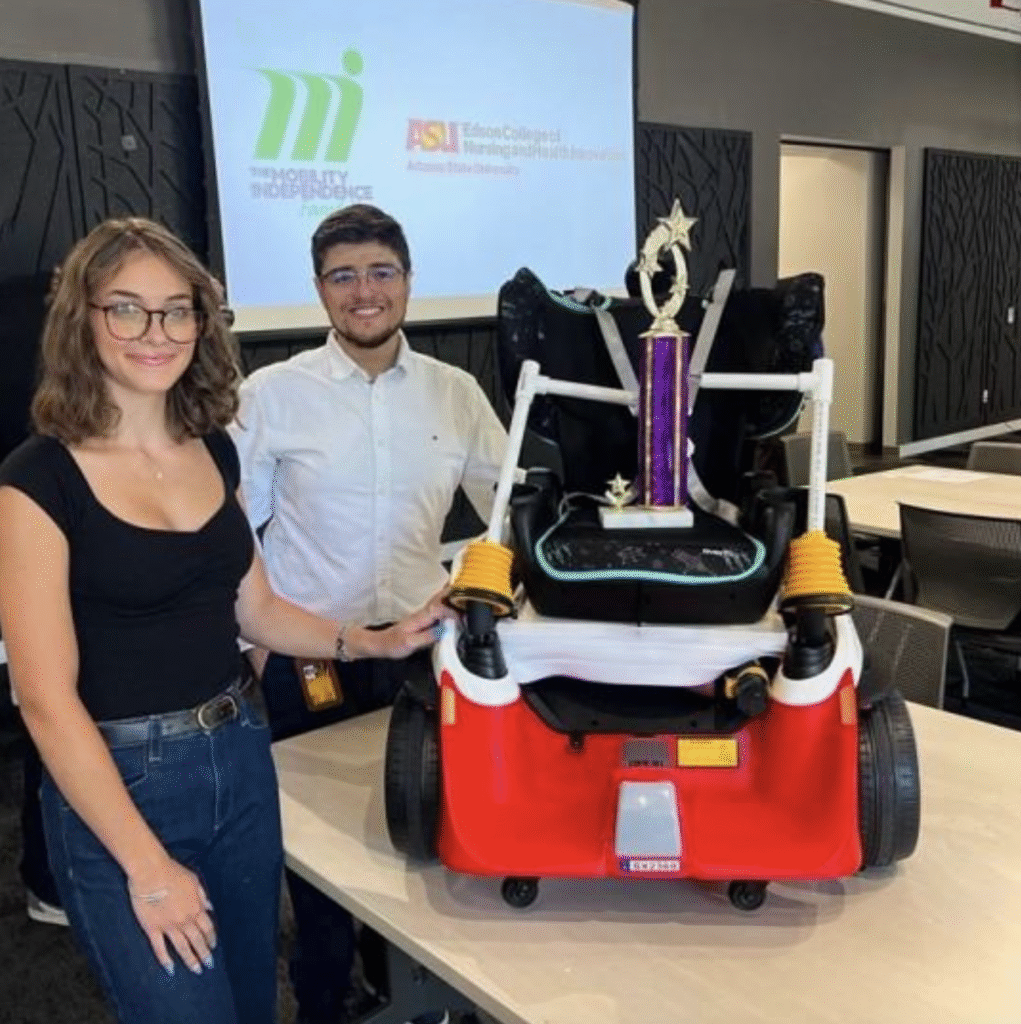
In collaboration with ASU’s Edson College of Nursing & Health Innovation, we developed “The Explorer”, a small power wheelchair designed to help children with mobility impairments learn joystick control and basic navigation skills. Built from adaptive seating systems and repurposed toy vehicles, it offers the following features:
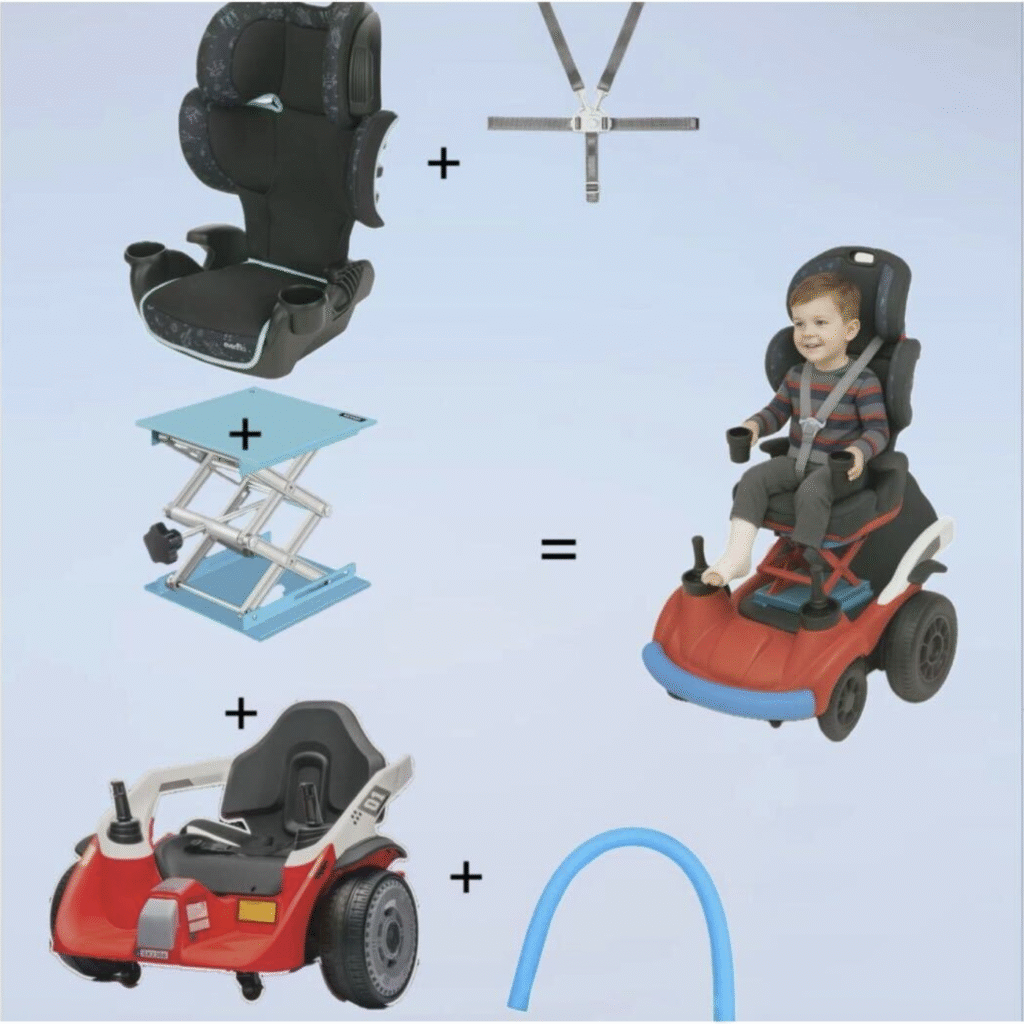
- Offers a low-cost, early-intervention mobility tool
- Uses 3D-printed parts and accessible electronics
- Can be assembled in classrooms, maker spaces, or physical rehabilitation centers for as little as under $400 The Explorer was designed, in collaboration with
the MIF, by a student team led by graduate student Daniel Chaves, MD, CSP, MGM, (pictured, right) a physician from Ecuador with extensive experience treating remote communities in the Andes Mountains. As of July 2025, the Board is pending a vote to offer Dr. Chaves a seat on the foundation’s Board of Directors. In addition, several pediatric therapists and educators have already requested kits and schematics, and we expect further development as the open-source community begins customizing it for different use cases.

Northeastern University Engineering Department, Bioengineering Program
Manual Wheelchair Design
Cohort
May-June 2025, 6 month break, January-April 2026
Project Description
Students will create an innovative, open-source manual wheelchair design using readily available bicycle parts and hardware from local stores, with minimal reliance on complex manufacturing processes; thus, allowing them to consider the needs of those vulnerable across the world. Students should consider interviewing mechanics and technicians while working within these limitations.
In many places, electricity and internet connectivity is unstable, meanwhile instant doorstep delivery services do not exist.
By developing a wheelchair design that can be assembled using parts and materials commonly found in local shops—such as bicycle repair shops, automotive repair shops, and hardware stores, students can enable better user and care provider access using available resources.
Ultimately, students aim to equip hospitals, doctors, and care providers in underserved regions with a practical, cost-effective solution for building manual wheelchairs locally, reducing reliance on costly imports and enabling faster, more reliable access to mobility aids for those in need.
Focus Areas
Chassis and Actuation Device Design
- Design a wheelchair frame and manual propulsion system using off-the-shelf components from bicycle shops and hardware stores.
- Lower costs and ensuring that parts can be easily substituted and repaired locally.
Suspension System
- Allow for navigation of rough terrain, providing comfort and stability beyond well-maintained sidewalks and paved areas.
Modularity and Customization
- Accommodate diverse body types and lifestyles, with easily adjustable, replaceable, and modular components.
Manual Braking System
- Improve the manual braking system to reduce wear and prevent accidental release.
Seating Ergonomics
- Minimize pressure sores, improve cleanliness, and ensure breathability.
Goals & Deliverables
- An average bicycle mechanic can build and repair the wheelchair, allowing global and affordable decentralized leveraging of pre-existing skilled laborers.
- A completed open-source modular, manual wheelchair design; easily produceable with standard parts available at bicycle shops and hardware stores worldwide.
- A comprehensive parts list, detailed assembly instructions, and all necessary schematics and drawings.

Rochester Institute of Technology, Computer Science Department
Online Repository Web Portal
Cohort
Fall of 2024
Project Description
Access to essential Durable Medical Equipment (DME) serves as a lifeline for individuals with disabilities, seniors, and those requiring mobility aids, yet inefficiencies in inventory management and communication between nonprofits and organizations leads to equipment sitting unused, aging out, or being discarded—despite individual needs for them.
Students will create an online collaborative resource designed for nonprofits and organizations that loan, repair, and manage DME. Organizations can list, track, and share their DME inventories, enabling more effective and equitable distribution of resources across different regions. By connecting geographically distant entities (e.g. New Jersey to California), the repository will reduce waste, improve service delivery, and ensure access to more individuals in need.
Focus Areas
Centralized Inventory System
- Develop a robust, easy-to-use, online inventory system where organizations can log and manage their DME stock.
- Allow for real-time updates, notifications, and search capabilities to identify available equipment and parts.
Resource Sharing
- Facilitate sharing resources across organizations, reducing redundancies, and enabling equipment to be utilized where needed most. This improves delivery service and extends equipment lifespan.
Technician Web Forum
- Create a dedicated web forum for technicians and experts to share knowledge, tips, and best practices for repairing and upgrading DME. This empowers organizations to maintain and enhance their equipment more effectively for as long as possible.
Sustainability and Waste Reduction
- Reduce the environmental impact of DME waste by allowing refurbishment and reallocation of equipment.
Future Integration with Open-Source Designs
- Serve as a future repository for open-source designs of DME, allowing organizations to access and implement innovative solutions, customize equipment, and contribute to the open-source library.
Goals & Deliverables
- A fully functional online platform that nonprofits and other DME providers can use to streamline their inventory management and resource sharing.
- A centralized inventory system, a web forum for technical support, and features that encourage collaboration and sustainability.
- A fully operational website with secure user accounts, inventory management tools, and search functions.
- A technician web-forum for communicating, sharing, and collaborating on DME repairs and upgrades.
- Documentation and tutorials to help organizations onboard to the platform.
- A future open-source DME design roadmap allowing the platform to grow and evolve with the needs of its users.
This project enhances organizations to serve their communities more effectively and provides a sustainable and collaborative ecosystem for DME provision worldwide.

University of Rochester, Engineering Department
Power Wheelchair Seating System Design
Cohort
Fall of 2024
Project Description
Seating systems in power wheelchairs are critical for safety, comfort, health, and overall quality of life for individuals reliant on mobility devices; however, many existing systems remain prohibitively expensive, lack adjustability, or fail to address common issues such as pressure sores, sepsis, and potential limb loss.
The open-source, customizable seating system design for power wheelchairs will be electrically powered to enable tilting, reclining, and leg rest adjustments. The seating system will be width-adjustable, accommodating changes in the user’s body size—essential for users experiencing weight fluctuations from new disabilities or other health conditions. This flexibility allows for greater comfort in a variety of situations.
Focus Areas
Open-Source Principles
- All designs, schematics, and assembly instructions will be made available as open-source materials. This ensures that individuals, caregivers, and technicians worldwide can access, modify, and customize the seating system to meet specific needs without the barriers of cost or proprietary restrictions.
Electrical Adjustability
- Design a seating system offering electrical tilting, reclining, and leg rest adjustment controls. This provides users with the ability to change positions throughout the day, reducing the risk of pain and enhancing overall comfort.
Width Adjustability
- Create a seat width adjustment mechanism, accommodating weight changes, proper seat fitting, and preventing health risks associated with poorly fitting systems ensuring proper seat fitting
Aerated Seat Pan
- Incorporate an aerated seat pan to promote airflow and reduce moisture buildup. This helps limit discomfort and the growth of bacteria, which can lead to serious health complications.
Pressure Sore Prevention
- Distribute pressure evenly by considering materials and structures, potentially integrating sensors or alerts notifying users/caregivers when repositioning is needed.
Goals & Deliverables
- Deliver a fully functional, open-source design for a power wheelchair seating system that is adaptable, comfortable, and conducive to long-term health. The design should be replicable with commonly available materials and components, making it as accessible as possible to a global audience.
Deliverables will include:
- Detailed schematics and CAD models of the seating system.
- A comprehensive parts list with specifications, sourcing information, and costs.
- Step-by-step assembly instructions, including adjustments for width and electrical systems.
- Documentation on the aerated seat pan design, including materials and manufacturing methods to ensure durability and effectiveness.
- Open-source licensing documentation ensuring the designs remain freely available and widely distributed.
This project will advance the state of power wheelchair seating technology and empower users and caregivers by providing a customizable, affordable solution tailored to individual needs.
Requirements
Open Source
Release under the (open-source license), meaning disabled individuals may utilize, modify, and/or adapt designs for personal use.
Drawings
Detailed instructions
Schematics and technical drawings
2D and 3D files
Digital models
Customization
All designs must contain easily alterable, swappable, upgradeable features and components; provided the original design does not adequately fit the user’s needs.
Readability
Step-by-step guides in simple English
Assume individuals have no technical knowledge or expertise throughout the entire process.
Inventory
Parts manual with complete inventory of the design including:
All hardware (nuts, bolts, screws, springs, etc.), part numbers, description of relevant specifications, purchase availability, prices per unit
Technical Assistance
If any components require assembly or fabrication by an experienced technician, provide detailed instructions for researching and contacting technical experts, hobby shops, and maker’s spaces.
Proof of Concept
Showcase how an individual with reasonable assistance would successfully use the design and achieve the product in a reasonable and practical manner.